
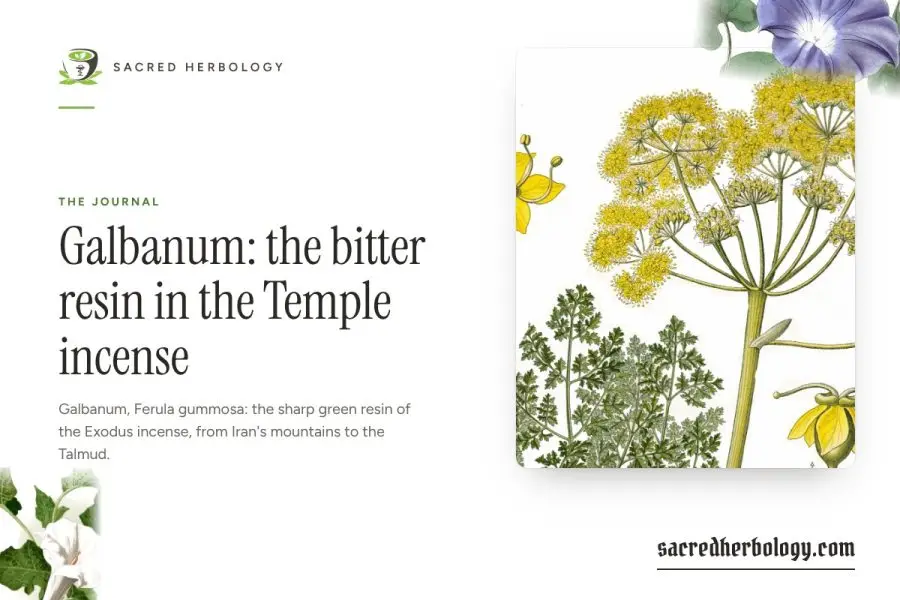
Galbanum: the bitter resin in the Temple incense
A sharp green resin from the Iranian mountains, named in the holy incense of Exodus and argued over by rabbis, perfumers and magicians ever since.
A sharp green resin from the Iranian mountains, named in the holy incense of Exodus and argued over by rabbis, perfumers and magicians ever since.
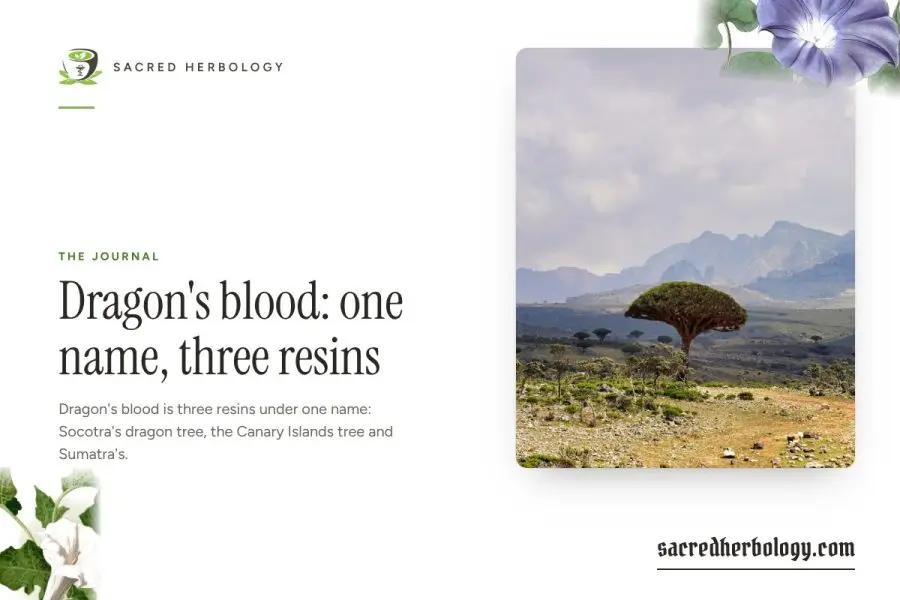
A red resin from Socotra, the Canaries and the rattan forests of Sumatra, sold under one name for two thousand years. Here is how to tell them apart.
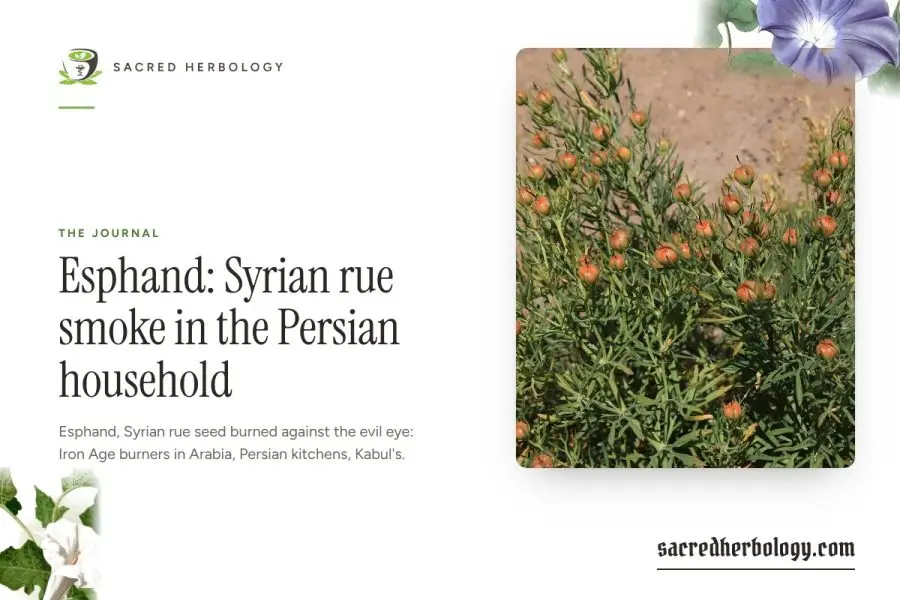
Seeds that crackle on the coals against the evil eye. Syrian rue from Iron Age Arabia to Kabul’s smoke boys and a grandmother’s kitchen.
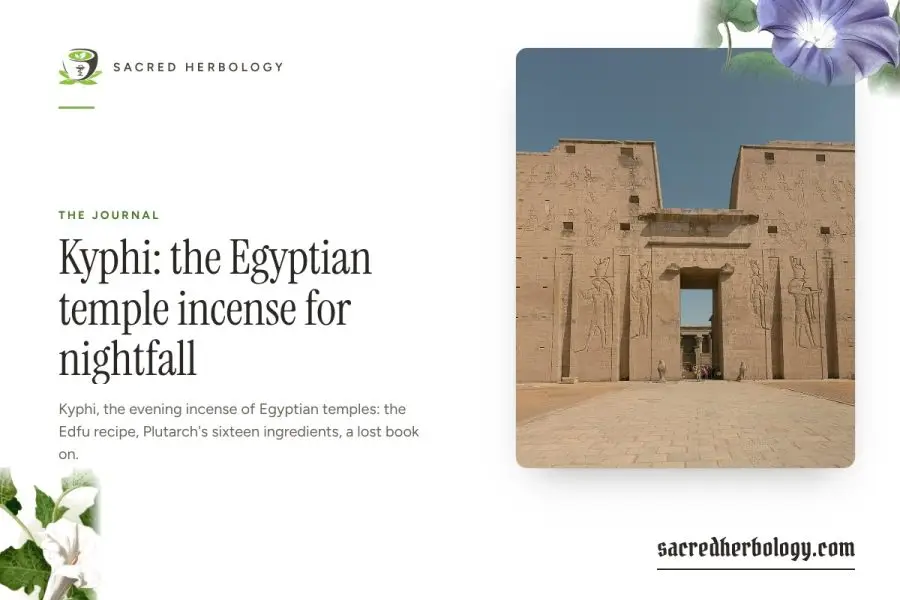
Sixteen ingredients, a perfume room carved in stone at Edfu, a lost book by a priest of Mendes, and the evening smoke that saw the sun into the dark.
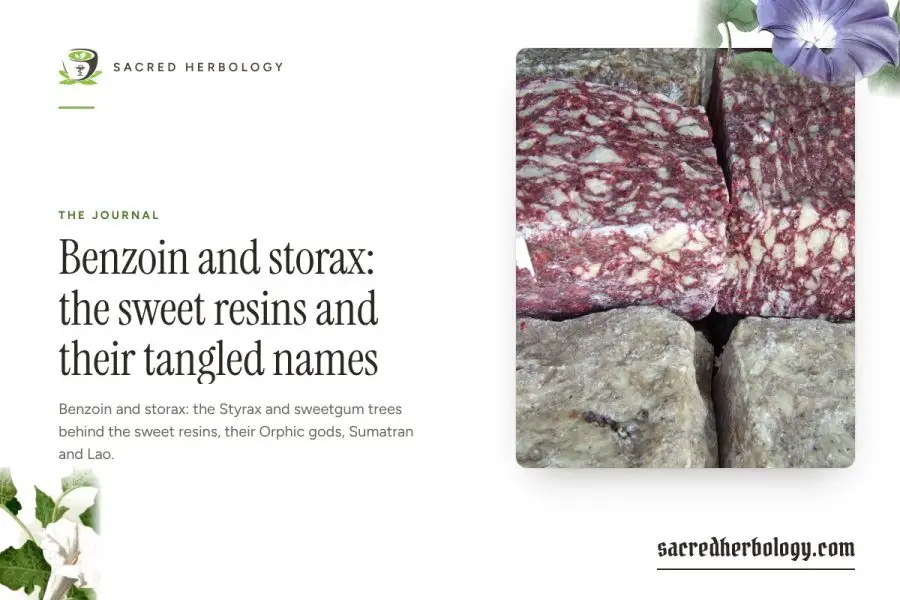
Two sweet resins, three kinds of tree and a knot of borrowed names, from the Orphic hymns and Sumatran gardens to the plastic cup in your hand.
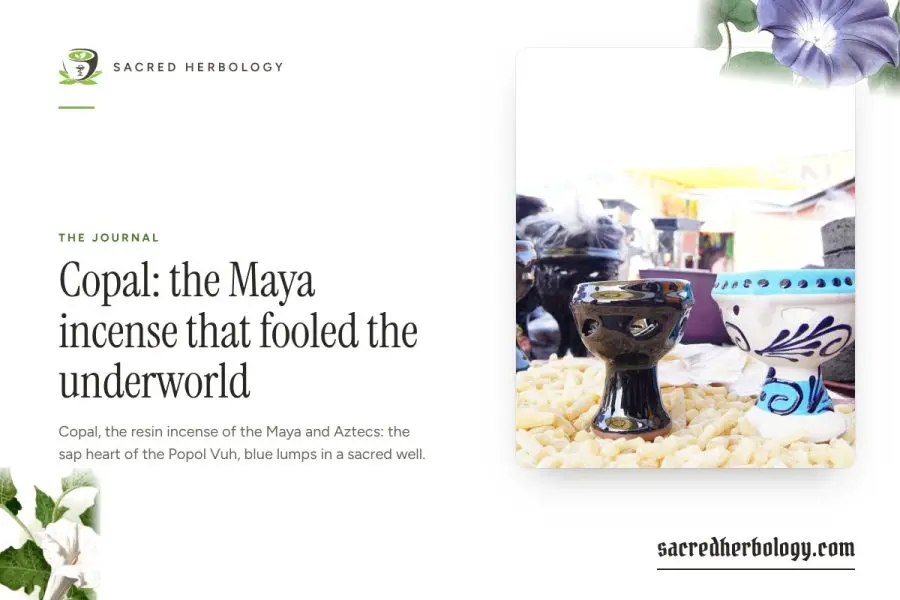
A heart of red sap in the Popol Vuh, blue lumps in a sacred well, and a name that covers a dozen different trees. How to read copal.
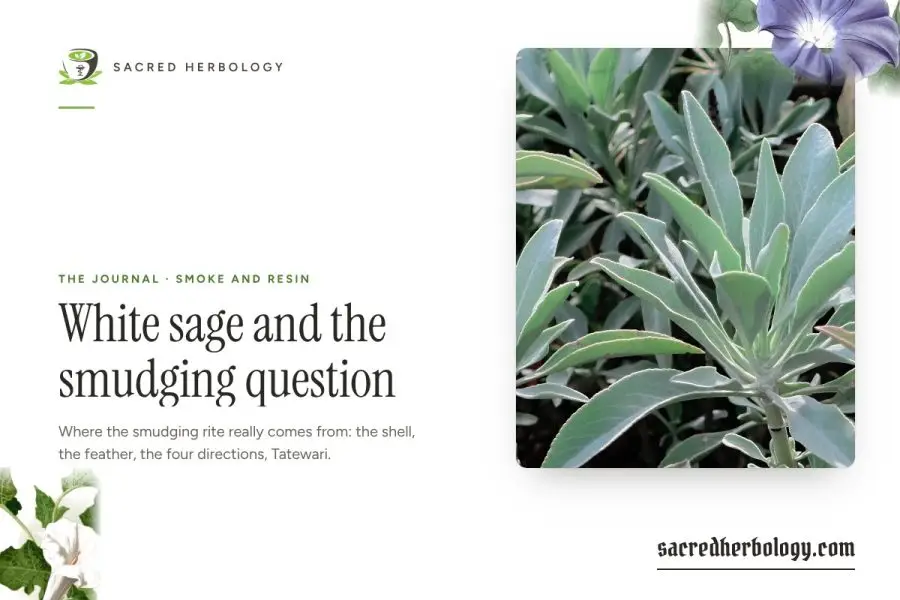
The shell, the feather, the four directions, the smoke that carries a prayer. What white sage really is, where each piece of the modern rite came from and when, who Tatewari is, which of the standard claims are misremembered and who first printed them, and how to build something of your own with a provenance you can recite.
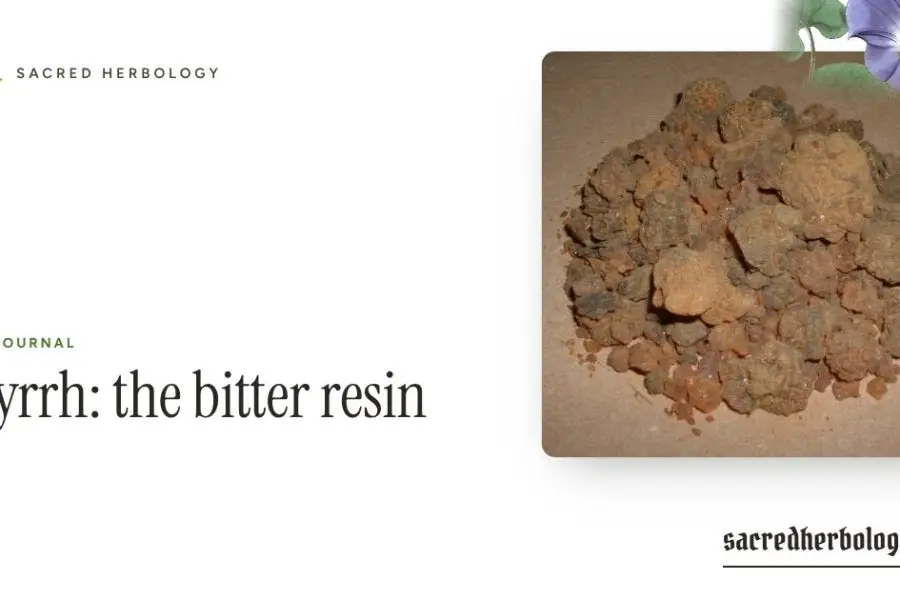
The resin named for bitterness, burned at noon in Egypt, carried to a tomb in Jerusalem and set on the Tree of Life by the magicians.
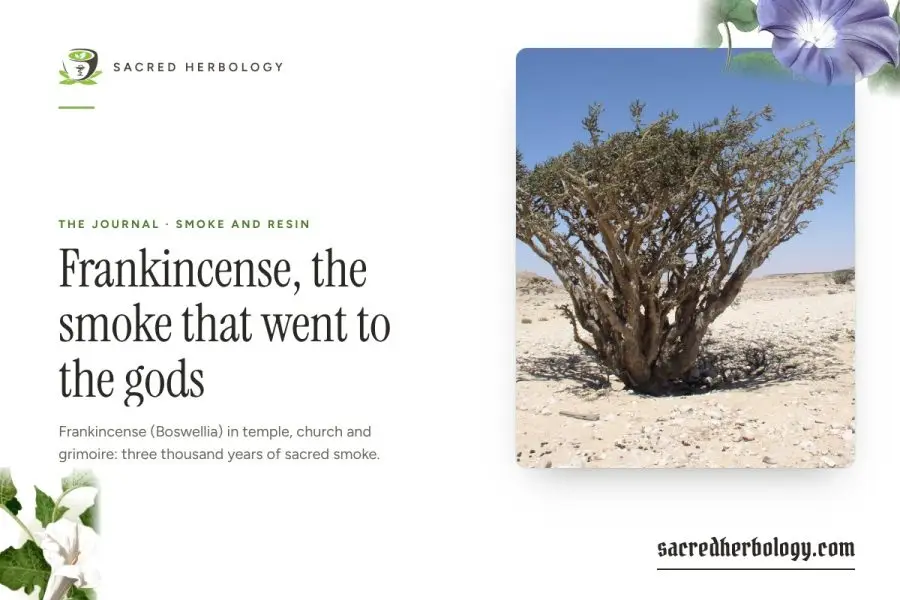
Three thousand years of temple smoke, a planetary fume in Agrippa, and what to look for when you buy a bag of tears today.
Photo credits on each article.