
On Palm Sunday in April 1990, at half past eight in the evening, the ABC broadcast a documentary called The Riddle of the Dead Sea Scrolls. Its central figure was a lecturer from the University of Sydney, then in her late fifties, who told a national audience that Jesus had not died on the cross. He had been given a drink laced with poison and a sedative, he had lost consciousness, he had been revived in a cave by the Dead Sea, and he had gone on to marry, divorce, remarry and father four children. Two years later the book followed, Jesus the Man, and it sold around the world.
Her name was Barbara Thiering. Most people who remember her now remember the ridicule. Fewer have read her, and fewer still have looked hard at the single most testable thing she said: that a sponge of sour wine lifted on a stick to a crucified man carried a drug. That is a claim about plants and chemistry, which puts it squarely on this site’s patch. So this paper does three things. It sets out who she was and what she argued, in her own words where I can find them. It sets out why nearly every specialist rejected her. And it asks what a first-century apothecary could actually have put in that sponge, and what it would have done.
Who she was
Barbara Thiering was born Barbara Houlsby in Sydney in November 1930 and died in Mosman in November 2015, the day after her eighty-fifth birthday. She took a BA at the University of Sydney in 1952, with honours in French and German, then a divinity degree from the University of London and a master’s from the Melbourne College of Divinity. Her doctorate, from Sydney, was on asceticism in the Dead Sea Scrolls. Her obituary in the Sydney Morning Herald dates it to 1972; other sources give 1973.
She was no amateur with a theory. She taught at Sydney from 1967 to 1993, first in Semitic Studies and then in the School of Divinity, and she published on Qumran in the field’s own journals, the Journal of Biblical Literature and the Revue de Qumrân, in 1974. She was also a public figure in her own right. Her 1973 book Created Second? came out of ABC radio talks on women and the church, and from 1981 to 1993 she sat as a lay member of the New South Wales Equal Opportunity Tribunal. When people later called her a crank, they were talking about a woman with a real doctorate, twenty-five years of teaching Hebrew and Old Testament, and a track record in the specialist literature.
Her Jesus books began with Redating the Teacher of Righteousness (1979), The Gospels and Qumran (1981) and The Qumran Origins of the Christian Church (1983), all academic monographs. The popular books came after the documentary: Jesus the Man (Doubleday, Sydney and London, 1992; published in the United States as Jesus and the Riddle of the Dead Sea Scrolls), Jesus of the Apocalypse (1995) and The Book That Jesus Wrote: John’s Gospel (1998). Jesus the Man was reissued in 2006.
The theory in one breath
Thiering’s key was a method she called the pesher technique. Pesher is Hebrew for “interpretation”, and it is the name scholars give to the Qumran commentaries, which take a biblical prophecy line by line and read it as a coded account of the commentator’s own day. Thiering turned the idea around. She argued that the Gospel writers had written the same way in reverse: a plain story “for babes” on the surface, with an exact history underneath for those who knew the rules. Certain words carried fixed special meanings. “Lepers”, “the poor”, “the dead” and “heaven” were code for particular grades and groups inside an ascetic community. Place names such as Jerusalem, the Kidron and Golgotha were codes for places at Qumran and nearby Mird.
Read that way, the Dead Sea Scrolls turned out to be about the first Christians. The Teacher of Righteousness, the revered founder figure of the scrolls, was John the Baptist. His enemy the Wicked Priest, also called the Man of a Lie, was Jesus. Jesus was born at Qumran in March of 7 BC, baptised in AD 29 and crucified at Qumran on a Friday in March AD 33, between Simon Magus on the centre cross and Judas Iscariot on the other side.
He survived. He married Mary Magdalene in a binding wedding that same March, when she was three months pregnant; they had a daughter and two sons, and she divorced him in AD 44. In AD 50 he married Lydia, the seller of purple from Acts 16, at Philippi, and they had a daughter. He travelled with Paul’s mission, was in Rome in the sixties, and by her reckoning died somewhere between AD 70 and 73, aged about seventy-six or more. She speculated that his bones might lie under the high altar of St Peter’s.
For what it’s worth, she had no time for the bloodline industry that grew up around this sort of story. She called the Holy Grail books fraudulent.
The book that Jesus wrote
Her last big book made a claim of its own, and she held it firmly. “There is every reason to believe,” she wrote, “against accepted opinion, that John’s gospel was written first, and was written by Jesus himself.”
Her version runs like this. After the cross Jesus spent a long convalescence in what she called inspired creativity. His hands were too damaged by the nails to write, so he dictated to John Mark, with Philip assisting. The book went out under John’s name because Jesus was officially dead. She read the odd closing verses of John 21, about the disciple who “wrote these things”, as the pesher record of that arrangement. By AD 37, she said, the Gospel was finished; the farewell discourses of chapters 14 to 17 were added around AD 45, and chapter 21 came later again. I haven’t found a place of composition stated in her writing, and I won’t invent one.
She tied this directly to the drink on the cross. Only John has Jesus say “I thirst”. In her reading that was because only the author himself knew what the words meant.
What she said about the drink
Here I have to correct the popular memory, including my own before I went back to her texts. Thiering’s drink was poison. She is usually lumped in with the older “Passover Plot” idea of a drug that makes a man look dead, and on her own website, which she approved and oversaw, she says something harder.
The first offer came when the three men were lifted up. “The three men were offered a drink that was poison mixed with a sedative,” she wrote. Suicide by poison “was considered an honourable method of avoiding unendurable suffering, as was later illustrated by the zealots of Masada. Jesus and Simon refused the poison.” That is her reading of Mark 15:23, where Jesus is offered wine mixed with myrrh and does not take it.
Then, at three in the afternoon, came John 19:28. “Jesus cried out ‘I thirst’. There had been a pre-arranged plan, that if the physical suffering became too much, he was to ask for the drink of poison by means of this signal.” The “vinegar” was “spoiled wine, wine spoiled by the addition of the poison and the sedative”. In her minute-by-minute version it was a cup fixed to a stick of two cubits, which is her reading of the sponge on the hyssop stalk, and it was held up to him by Ananus the Younger, the brother of the priest Jonathan Annas, who had supplied the poison. The sedative took about half an hour; at half past three his head dropped.
The rest of the rescue is plant medicine. John 19:39 has Nicodemus arrive with “a mixture of myrrh and aloes, about a hundred pounds weight”. Thiering read Nicodemus as a pseudonym of Theudas, and read the load as a medicine chest dressed up for Pilate as burial spices. “The juice of the aloe when given in large quantities acts as a rapid purgative. Myrrh is a soothing ingredient.” In the cave, Simon Magus, legs broken, was lowered in to Jesus and squeezed the aloe leaves with his wrists so the juice ran down Jesus’s throat, with myrrh to settle “the stomach burnt by the poison”. By nine that night, she says, Jesus could walk. Judas was later made to swallow the same poison.
Two cautions. Her own pages don’t fully agree with each other. One passage describes a plan “to make it appear that he had committed suicide”, with an antidote ready in the cave, which brings her closer to a staged death. And the “snake venom” you will see in summaries of her book traces to a one-line description by Robert Van Voorst in Jesus Outside the New Testament (2000, p. 80), repeated on Wikipedia. None of her own writing that I could read names a snake. Until someone checks the page in the 1992 book, she shouldn’t be quoted as saying it.
The drink as the Gospels tell it
Before going on with Thiering, it’s worth setting the four accounts side by side, because they don’t tell the same story and the differences are where most of the arguments start.
Mark has two drinks. The first comes before the nails, at Mark 15:23: “they gave him to drink wine mingled with myrrh: but he received it not.” The Greek is a single participle, esmyrnismenon oinon, myrrhed wine. The second comes at the end, at 15:36, when someone runs, fills a sponge with oxos, puts it on a reed and holds it up, saying “let us see whether Elias will come to take him down.” That second drink is offered in the middle of a joke. Nobody in Mark’s scene is being kind.
Matthew keeps both drinks and changes the first. At Matthew 27:34 the wine is mixed with gall, cholē, and Jesus tastes it and refuses. The King James Version reads “vinegar” there, following the later Byzantine manuscripts, while the older manuscripts behind modern editions read “wine”. Either way, myrrh has gone and gall has come in, and the reason is plain once you open the Psalms. Psalm 69, verse 21 in English Bibles (68:22 in the Greek Septuagint), reads: “They gave me also gall for my meat; and in my thirst they gave me vinegar to drink.” The Septuagint uses the same two words, cholē and oxos. Matthew has tuned Mark’s scene to the psalm.
Luke drops the myrrh and the sponge altogether. At Luke 23:36 the soldiers mock him, “coming to him, and offering him vinegar.” There is no reed and no second offer.
John, alone, has the words “I thirst”, and he tells us why they were spoken: “that the scripture might be fulfilled.” A jar of oxos is standing there, a sponge is filled, it is put “upon hyssop” and lifted to his mouth, and he takes it and dies. John has no myrrh-wine at the start and no mockery at the end. What he does have is hyssop, and hyssop in John is loaded. It is the plant the Israelites dipped in the blood of the Passover lamb to mark their doorposts in Exodus 12:22. John places the crucifixion on the day of Preparation, the afternoon the lambs were killed in the Temple (John 19:14), and a few verses later he quotes the Passover rule that not a bone of the lamb shall be broken (19:36, from Exodus 12:46). The hyssop stalk ties the dying man to the lamb. Whatever grew on the hill that day, John chose his plant for what it meant.
The writers after the Gospels followed Matthew’s lead. The Gospel of Peter, a second-century text known mostly from a fragment found at Akhmim in Egypt in the winter of 1886-87, has one of the crowd say “Give him to drink gall with vinegar”, and they mix it and give it to him. The Epistle of Barnabas, from about the same period, uses the same pair, gall and vinegar, as a proof from prophecy. In the Middle Ages the anonymous man with the sponge acquired a name, Stephaton, and he stands opposite Longinus with his spear in crucifixion scenes across Europe.
So there are two ways to read the drink. One reads it as history with a code in it, which was Thiering’s way. The other reads it as the evangelists shaping their accounts around Psalm 69 and the Passover, which is how most scholars read it. On the second reading the sponge tells us a great deal about how the first Christians read their scriptures and very little about what was in the jar.
An old idea with a new key
The survival theory is older than Thiering by two hundred years, and she knew it. In the 1780s Karl Friedrich Bahrdt had Jesus feign death with drugs supplied by Luke the physician, and revived by Essenes. Karl Venturini, around 1800, gave him a secret Essene rescue party. H.E.G. Paulus, in 1828, preferred a death-like coma and a natural recovery in the cool tomb, and Schleiermacher leaned the same way in his lectures. Albert Schweitzer tells the whole story in The Quest of the Historical Jesus. The idea was damaged most by David Friedrich Strauss, who pointed out in 1864 that a half-dead man limping out of a tomb could never have convinced anyone he had conquered death.
The modern version most people know is Hugh Schonfield’s The Passover Plot (Hutchinson, 1965). Schonfield’s Jesus arranges his own crucifixion and “contrived to be given a soporific potion to put him into a deathlike trance”. In Schonfield the plan goes wrong. The spear wound ruins it, and in the usual reading Jesus dies soon after being taken down.
Thiering’s version differs from Schonfield’s at every joint. Schonfield has a stupefying drug meant to imitate death, and the plan fails. Thiering has a lethal poison with a sedative, taken as suicide, reversed by a purge, and a man who lives another forty years. What she added was the claim that the Gospel texts themselves, read by her rules, recorded all of it.
The chemistry of a sponge of sour wine
One point deserves proper credit, because it’s the strongest thing on the survival side and almost nobody in the theological literature has noticed it. The word the Gospels use for the drink is oxos, sour wine or wine vinegar, the same thing as the Roman posca, the soldiers’ drink of vinegar cut with water. Plutarch has the elder Cato calling for vinegar on campaign when he was desperately thirsty, and the Historia Augusta has the emperor Hadrian eating camp food of bacon, cheese and posca to show solidarity with his men.
Vinegar is acid. Most of the powerful plant drugs of the ancient world are alkaloids, and alkaloids are bases. Put a base in acid and it picks up a proton and becomes a salt, and the salts dissolve in water far better than the free alkaloids do. The published dissociation constants bear this out. At the acidity of wine or sour wine, around pH 3, morphine and codeine from the opium poppy sit in the dissolved salt form by a margin of something like a hundred and sixty thousand to one. Scopolamine from mandrake and henbane is a slightly weaker base and sits a little lower, at tens of thousands to one, while atropine, and coniine from hemlock, are stronger bases and are held in solution more thoroughly still. The alcohol in wine helps a little as well. It wets the plant tissue and carries out the resins and less water-loving compounds that plain water leaves behind.
So the chemistry is right. An acidic wine is a perfectly good vehicle for plant alkaloids, and the ancients knew it by practice if not by theory. Dioscorides, writing around AD 60, records that some people boil mandrake root in wine and give it to those who are about to be cut or cauterised, so that they won’t feel it (De materia medica 4.75 in Wellmann’s numbering). Pliny the Elder says the same of mandrake in Natural History 25.150: it is drunk “before incisions and punctures, so that they are not felt”, and in larger quantity it kills. The Babylonian Talmud, in tractate Sanhedrin 43a, records that a condemned man being led out to execution was given “a grain of frankincense in a cup of wine in order to confuse his mind”, on the authority of Proverbs 31:6, “Give strong drink unto him that is ready to perish”, and that the prominent women of Jerusalem used to provide it. The Talmud was set down centuries after the crucifixion, so it tells us about a custom and says nothing directly about Golgotha. But a drugged wine at an execution is not a fantasy. There was a tradition of it.
One refinement. Ordinary wine already sits at about pH 3 to 4 from its own tartaric and malic acids, so the vinegar adds less than you might think. Any wine would have extracted these alkaloids. And no ancient source gives us the strength of posca; the fixed recipes you see online are modern guesses.
What could have been in it
If you were an apothecary in Judaea around AD 30 and wanted a drink that would make a man look dead, what was on the shelf? Here are the candidates, taken honestly. No doses or methods appear here, deliberately; every plant on this list has killed people, and several of them, hemlock and thornapple (Datura stramonium) among them, grow wild as weeds in Australia. If a person, a child or a pet has eaten any part of one, call 000 or the Poisons Information Centre on 13 11 26. And because suicide comes up in her story, if any of this sits close to home, Lifeline is on 13 11 14.
Opium, the dried latex of the opium poppy, Papaver somniferum, was known across the Greek and Roman world, and Dioscorides describes both the latex and the whole-plant extract. It is the only candidate that credibly produces something like apparent death: deep sedation, pinpoint pupils, slow and shallow breathing, a slack body, unresponsiveness. Keep that list of effects in mind, because it matters in a moment.
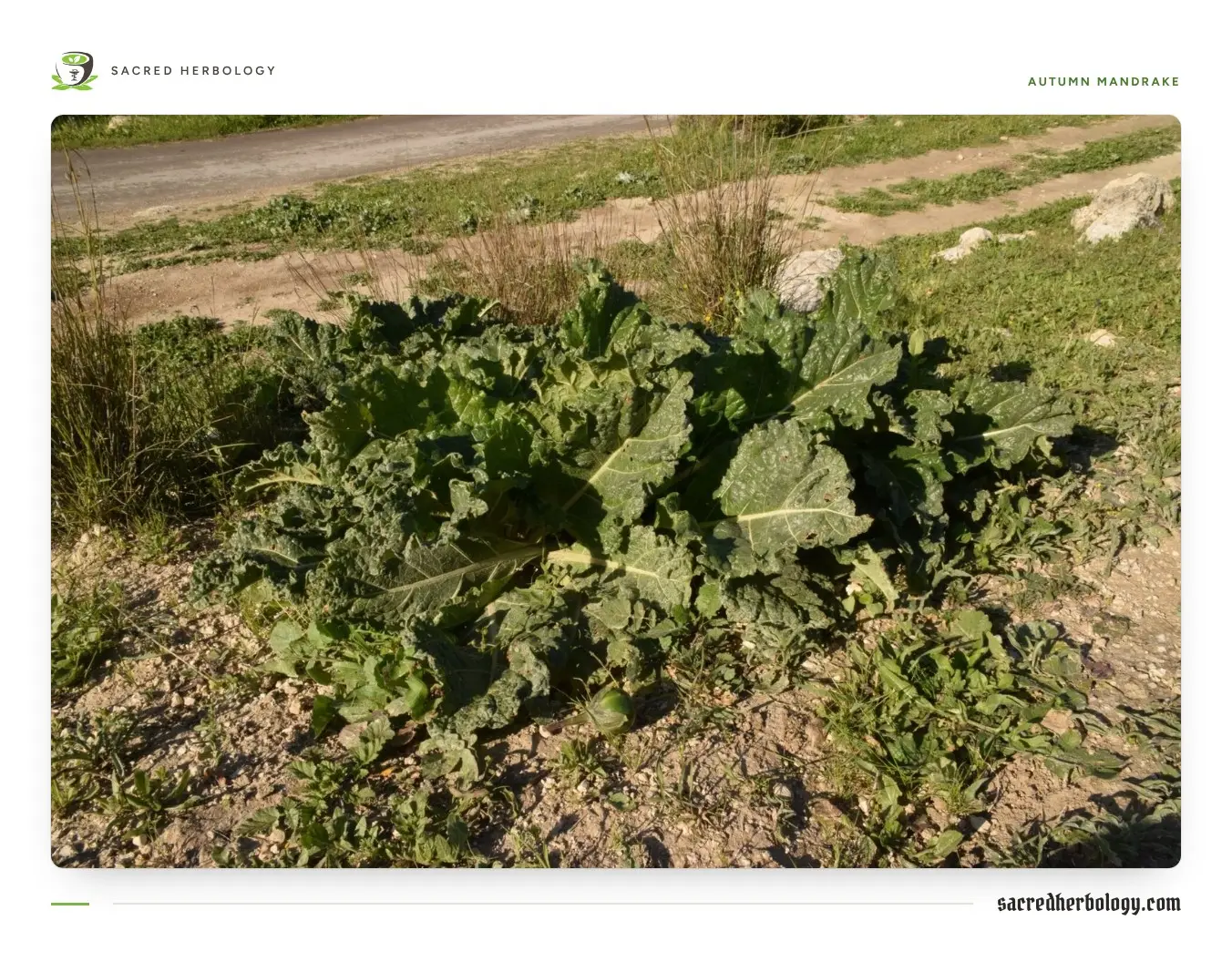
Mandrake grows wild in the Levant; Mandragora autumnalis is native there, and it is traditionally identified with the dudaim that Leah and Rachel bargain over in Genesis 30. Henbane, Hyoscyamus niger in Europe and its golden-flowered cousin Hyoscyamus aureus on the rocks and walls of the Levant, was a standard ancient soporific. Both are nightshades, family Solanaceae, and both carry the tropane alkaloids hyoscyamine and scopolamine. At anything short of a near-fatal dose they give you the opposite of a corpse: a racing heart, flushed skin, wide pupils, agitation and delirium. In a published series of fifteen mandrake poisonings in Spain in 1990, fourteen patients were hyperactive or hallucinating and every one had a fast heart rate. Belladonna, Atropa belladonna, is a plant of Europe and the hills of Turkey and Iran, and doubtful for Judaea. Datura, often mentioned in these discussions, is a harder case. Botanists still argue over whether any Datura grew in the Old World before Columbus; a 2007 review by Geeta and Gharaibeh makes the case that one did. Even on their reading there is no evidence for it in first-century Judaea, so it has no real place in this scenario.

Hemlock, Conium maculatum, the drink of Socrates, paralyses from the feet up and stops the breathing. Aconite, monkshood, a species of Aconitum, stops the heart. Neither offers any window of false death. They kill.
Snake venom, the version attributed to Thiering in the summaries, is the weakest candidate of all. Venom is made of proteins and peptides, and the gut breaks proteins down; pharmaceutical companies struggle to get even engineered peptides absorbed by mouth. I can’t find a sound human study to say swallowed venom is always harmless, so I won’t say it. But very little would reach the blood, and what did would paralyse or thin the blood, which on a cross is lethal.
Myrrh, the drink of Mark 15:23, is the gum resin of Commiphora myrrha, a thorny shrub of southern Arabia and the Horn of Africa. It has one genuinely interesting result. In 1996 Italian researchers reported in Nature that two compounds from myrrh, furanoeudesma-1,3-diene and curzerene, relieved pain in mice, and that the effect was blocked by naloxone, which points to the opioid receptors. That is mice, and pain relief, and nothing like sedation or unconsciousness. Those compounds sit in the volatile oil, a small fraction of the raw resin, and they dissolve poorly in water. Myrrh was also one of the most adulterated goods in the ancient trade; Pliny, in the twelfth book of his Natural History, complains that it was cut with lumps of mastic and with gum. So nobody can say what any particular cup of myrrh-wine actually held. It fits a mercy drink. And the Gospel says he refused it.
Aloes in John 19:39 may mean the bitter dried leaf juice of Aloe, probably Socotrine aloe, Aloe perryi, a strong purgative, as Thiering took it, or the fragrant heartwood of Aquilaria, eaglewood, which many commentators prefer for a burial. Neither is a sedative or an antidote to one. If it was Aloe, Thiering’s use of it as a purge is at least internally consistent; a purgative empties the bowel. But the purgative compounds in aloe, anthrone glycosides such as aloin, work on the large bowel and are slow, usually taking six hours or more to act. That makes it a poor fit for her “rapid purgative” and a man walking by nine that night. And it does not undo a poison that has already been absorbed hours earlier.
Could anyone survive a cross?
Survival theorists always come back to one verse. Mark 15:44 says that when Joseph of Arimathea asked for the body, “Pilate marvelled if he were already dead”, and sent for the centurion to check. Crucified men usually lasted longer than six hours. Some hung for days.
There is one ancient report of a man coming down from a cross alive and living. It comes from Josephus, who was there. In his Life (sections 420-421), writing of the siege of Jerusalem in AD 70, he says he saw many prisoners crucified and recognised three of them as old acquaintances. He went to Titus in tears. Titus ordered all three taken down and given the best care available. Two died under the physicians’ hands. The third recovered.
That is the whole of the evidence, and it cuts both ways. It shows that a man taken down early, by order, and nursed by doctors could live. It also shows that two out of three such men died even with that care. And nothing in it involves a drug.
The one crucified skeleton ever recovered from Roman Judaea tells the physical story. In 1968, at Giv’at ha-Mivtar in north Jerusalem, builders opened a tomb containing an ossuary inscribed with the name Yehohanan. Inside was the right heel bone of a young man with an iron nail still through it, bent at the tip where it had struck a knot in the wood and could not be pulled free. The first reports, by Vassilios Tzaferis and Nicu Haas in 1970, reconstructed a great deal from very little. Joseph Zias and Eliezer Sekeles re-examined the bones in 1985 and pared the story back: the nail through the heel is certain, and much of the rest is not. What the heel does settle is that crucifixion in first-century Judaea was a real practice with real nails, and that the men it killed could be given an ordinary family burial afterwards.
Where the pharmacology pushes back
Here is where the idea runs into trouble, and I want to be fair about why.
The first problem is time. John 19:30 is blunt: “When Jesus therefore had received the vinegar, he said, It is finished: and he bowed his head, and gave up the ghost.” Mark has the sponge, a loud cry and death. Nothing on the ancient shelf works that fast by mouth. In a 1989 study of healthy volunteers, morphine swallowed as a solution took about forty-five minutes to reach its peak in the blood, and only about a quarter of what was swallowed got into the circulation at all. A tablet held against the gum took six hours, though that tablet was built to release slowly, so it tells us less about a sucked sponge than it seems to. The Spanish mandrake patients took between one and four hours to show symptoms. Thiering herself allowed half an hour for her sedative, and quietly shifted the collapse from the moment of drinking to half past three. That’s an honest adjustment, but it means the Gospel timing, which she read as exact code everywhere else, has to give way here.
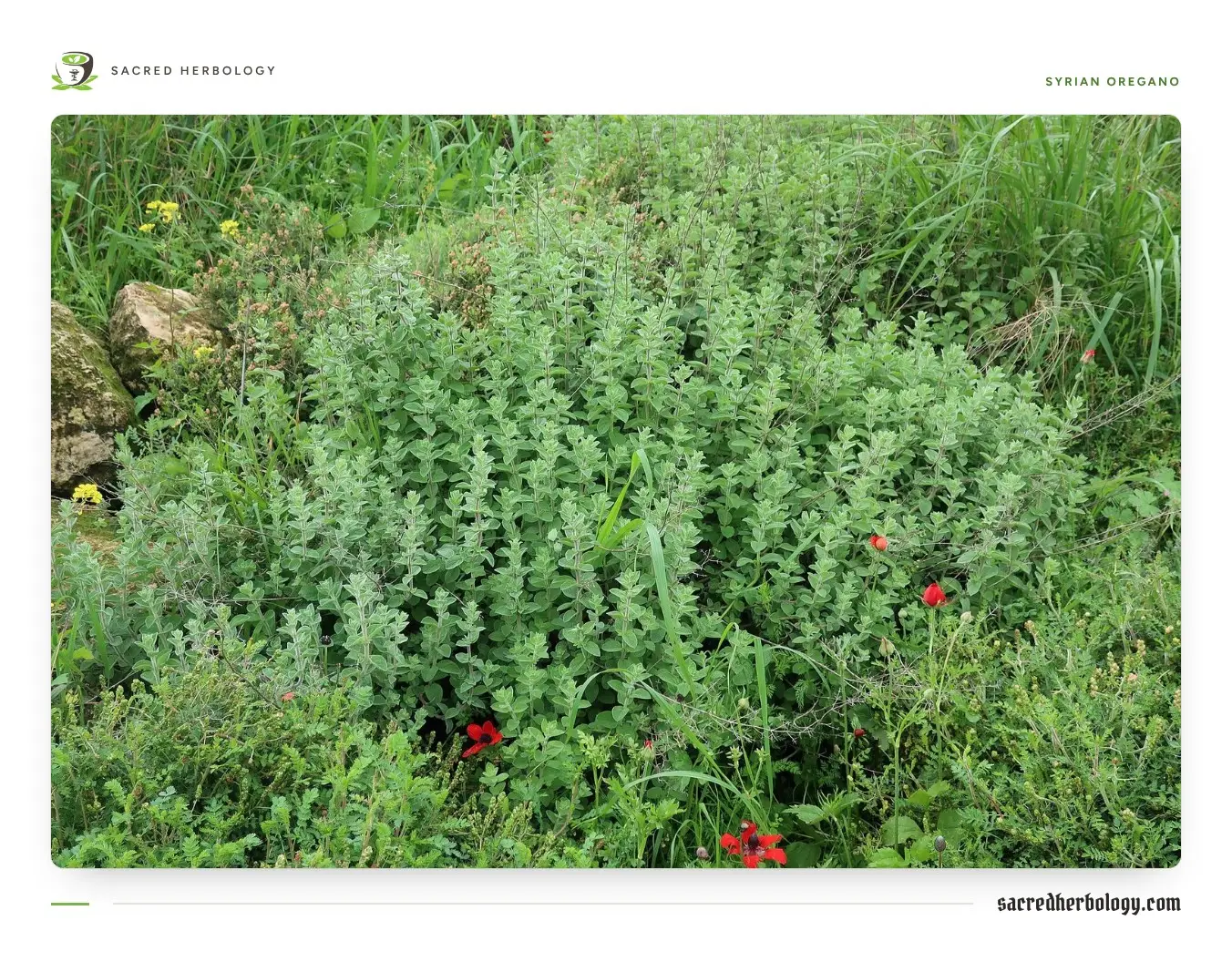
The second problem is volume. A sponge on a stalk delivers a mouthful or two. To incapacitate a man with that, you need a concentrate, and a concentrate prepared in advance is a very different thing from a soldier dipping a sponge in the jar of posca that happened to be standing there, which is how John tells it. The stalk is a problem of its own. The hyssop of the Bible is usually identified as Syrian oregano, Origanum syriacum, a small, woody-based herb whose stems are a poor pole for a soaked sponge. That is why some editors since the sixteenth century have suspected the word was once hyssos, a javelin. Mark and Matthew simply say a reed.

The third problem is the one I find decisive. Crucifixion killed by exhaustion, blood loss and shock, and above all by the struggle to breathe. The medical literature argues over the exact mechanism; a 2006 review by Matthew Maslen and Piers Mitchell found more than ten competing theories and warned that nobody really knows. But every account agrees that a man hanging by his arms has to push himself up to draw breath. Opium removes exactly that drive. It blunts the body’s response to rising carbon dioxide and slows the breathing. Sedate a crucified man deeply enough to look dead, and he slumps into the position that most restricts his breathing, with nothing left to push against it. On a cross, the drug that best imitates death is the one most likely to bring it on for real. The better the performance, the more likely the death.
After that come the spear wound in John 19:34, if it happened as told, the blood loss from the scourging, and hours in a cold tomb. No drug helps with any of that.
The scholars’ case
The pharmacology is my ground. The deeper case against Thiering was made by the specialists in her own field, and it was made on method.
Geza Vermes, the Oxford scholar who produced the standard English translation of the scrolls, put it most exactly in the New York Review of Books in December 1994, replying to a letter from her. The Qumran pesharim, he pointed out, interpret “an already existing prophetic text”. Thiering had turned the sequence upside down, inventing the hidden history first and then finding it in the Gospels. Her theory, he said, “has made no impact on learned opinion”. N.T. Wright gave her a whole chapter in Who Was Jesus? (SPCK, 1992) and concluded that no serious scholar had given the theory any credence. Chris Forbes, the ancient historian at Macquarie, reviewed both the documentary and the book and called the crucifixion account “a very silly version of the old ‘swoon’ theory”. J.A. Naudé’s long critique in Acta Theologica in 1999 is the fullest dismantling of the method I have read.
The core complaint is simple. A code that only one person can read, and that yields dates to the half hour and a detailed family tree from texts that say nothing of the kind, can’t be checked by anyone else. Other scholars applying her rules did not reach her results. For a historian that is fatal, however learned the reader.
Then came the laboratory. Radiocarbon dating of the scrolls was done at Zurich in 1991 and at Tucson in 1995. The Tucson team, A.J.T. Jull and colleagues writing in Radiocarbon, dated the Habakkuk commentary, the scroll that carries the Teacher of Righteousness and the Wicked Priest, to between 104 and 43 BC. That is a century or more before John the Baptist was born. They found that the carbon dates agreed well with the dates scholars had already reached from the handwriting. A 2025 study in PLOS ONE combining radiocarbon with computer analysis of the script pushes several scrolls older still.
Her side of the argument
She did not simply wave the results away. In 1999 she and G.A. Rodley published a reply in Radiocarbon itself, the specialists’ own journal, which is more than most people with a heterodox theory ever do. They pointed out, correctly, that the Psalms commentary from Cave 4 dates to between AD 22 and 78, a genuinely first-century date, and that the Teacher appears in it as a living figure. They argued that the older Habakkuk date could reflect an old skin reused, citing Josephus on the Essenes, who wore their clothes until they fell apart. Their own abstract claimed only that the evidence “may be seen as compatible” with her view. That is a careful claim. It is also a weak one, because a late copy tells you when that copy was made. It can’t move the date when the text was first composed.
Her better contributions have aged well. The question she kept asking, how close the early Christians were to the Qumran community with its common meals, common property, ritual washing and fervent expectation of a messiah, was a real one, and it still is. Wright, even while rejecting her, credited her with insisting on the full humanity of Jesus and on his programme as a way of being God’s people that refused the violence around it. Scholarship since has moved away from a single tidy “Essene Qumran” in any case. None of that later work has moved towards her Baptist and her Wicked Priest.
Was she laughed at fairly?
Partly. Some of the mockery in 1990 was cheap. It came from people who hadn’t read her and didn’t like a woman in a divinity school telling a Sunday-night audience that the Resurrection was a rescue. She deserved to be argued with, and in the end she was, by Vermes, by Naudé, by the radiocarbon laboratories, and she argued back in print.
But the rejection itself was earned, and it rests on method. The pesher technique can’t be tested, and the one part of her reconstruction that can be tested against something outside the text, the date of the scrolls, went against her.
The drink is the part I’d keep on the table. The chemistry on the survival side is sound. A sour wine will carry plant alkaloids, antiquity knew how to drug wine, and a mercy draught at executions is attested. The trouble lies in what the drug would do to a man hanging from his arms. A plant that could make him look dead would most likely have finished him, and the timing, the volume and the spear all have to fall Thiering’s way at once for the story to hold.
The myrrh-wine at Mark 15:23 is the moment with the real pharmacological history behind it: a known custom, a resin with a measurable if modest effect in laboratory mice, offered to a condemned man. He turned it down. Whatever else one believes about that afternoon, the refusal is the detail that has puzzled readers for two thousand years, and it’s a better place to start thinking than a code only one reader could break.
Where this comes from
- Thiering, Barbara. Jesus the Man. Doubleday, Sydney and London, 1992; reissued Atria/Simon & Schuster, 2006. US edition Jesus and the Riddle of the Dead Sea Scrolls, HarperSanFrancisco, 1992.
- Thiering, Barbara. The Book That Jesus Wrote: John’s Gospel. Doubleday, Sydney, 1998.
- Thiering, Barbara. Redating the Teacher of Righteousness. Theological Explorations, Sydney, 1979; The Gospels and Qumran, 1981; The Qumran Origins of the Christian Church, 1983.
- Thiering, Barbara. The Pesher Technique website (© 2005-07, approved by the author), pages “The Resurrection”, “Combined Narrative”, “Overview”, “Simon Magus”, “Marriage of Jesus” and “From Qumran to Rome”. Archived copies, Internet Archive.
- Thiering, Nerida, Paul Thiering and David Thiering. “Academic and iconoclast Barbara Thiering exemplified tumultuous 1960s ethos”. Sydney Morning Herald, December 2015.
- The Encyclopedia of Women and Leadership in Twentieth-Century Australia, entry “Thiering, Barbara”. Australian Women’s Archives Project.
- Van Voorst, Robert E. Jesus Outside the New Testament. Eerdmans, Grand Rapids, 2000, p. 80.
- Vermes, Geza. Reply to Barbara Thiering, “The Pesher Technique”. New York Review of Books, December 1994.
- Wright, N.T. Who Was Jesus? SPCK, London, 1992.
- Forbes, Chris. Review of Jesus the Man and The Riddle of the Dead Sea Scrolls. Department of Ancient History, Macquarie University (archived).
- Naudé, J.A. “Barbara Thiering’s interpretation of Jesus’ life”. Acta Theologica 1999(1): 58-98.
- Betz, Otto and Rainer Riesner. Jesus, Qumran and the Vatican: Clarifications. SCM Press, London, 1994.
- Star, Leonie. The Dead Sea Scrolls: The Riddle Debated. ABC Enterprises, Sydney, 1991.
- Bonani, G. et al. “Radiocarbon Dating of the Dead Sea Scrolls”. ‘Atiqot 20 (1991): 27-32.
- Jull, A.J.T., D.J. Donahue, M. Broshi and E. Tov. “Radiocarbon Dating of Scrolls and Linen Fragments from the Judean Desert”. Radiocarbon 37.1 (1995): 11-19.
- Rodley, G.A. and B.E. Thiering. “Use of Radiocarbon Dating in Assessing Christian Connections to the Dead Sea Scrolls”. Radiocarbon 41.2 (1999): 169-182.
- Popović, M. et al. “Dating ancient manuscripts using radiocarbon and AI-based writing style analysis”. PLOS ONE 20(6): e0323185, 2025.
- Schonfield, Hugh J. The Passover Plot. Hutchinson, London, 1965.
- Schweitzer, Albert. The Quest of the Historical Jesus. First complete edition, ed. John Bowden. SCM Press, London, 2000.
- Babylonian Talmud, Sanhedrin 43a. William Davidson edition (Koren Steinsaltz), Sefaria; I. Epstein (ed.), Soncino, London, 1935.
- Dioscorides. De materia medica 4.75. Ed. M. Wellmann, Weidmann, Berlin, 1906-14; trans. L.Y. Beck, Olms-Weidmann, Hildesheim, 2005.
- Pliny the Elder. Natural History 25.150. Trans. W.H.S. Jones, Loeb Classical Library 393, Harvard, 1956.
- Pliny the Elder. Natural History Book 12 (myrrh and its adulteration). Trans. H. Rackham, Loeb Classical Library 370, Harvard, 1945.
- Plutarch, Cato Maior 1.13 (Loeb, trans. B. Perrin, 1914); Historia Augusta, Hadrian 10.2 (Loeb, trans. D. Magie, 1921).
- Dolara, P. et al. “Analgesic effects of myrrh”. Nature 379 (1996): 29. PMID 8538737.
- Jiménez-Mejías, M.E. et al. “Atropine poisoning by Mandragora autumnalis: a report of 15 cases”. Medicina Clínica 95 (1990): 689-692. PMID 2087109.
- Hoskin, P.J. et al. “The bioavailability and pharmacokinetics of morphine after intravenous, oral and buccal administration in healthy volunteers”. British Journal of Clinical Pharmacology 27 (1989): 499-505. PMID 2719903.
- Pattinson, K.T. “Opioids and the control of respiration”. British Journal of Anaesthesia 100 (2008): 747-758. PMID 18456641.
- Edwards, W.D., W.J. Gabel and F.E. Hosmer. “On the physical death of Jesus Christ”. JAMA 255 (1986): 1455-1463. PMID 3512867. United States journal.
- Maslen, M.W. and P.D. Mitchell. “Medical theories on the cause of death in crucifixion”. Journal of the Royal Society of Medicine 99 (2006): 185-188. PMID 16574970.
- Retief, F.P. and L. Cilliers. “The history and pathology of crucifixion”. South African Medical Journal 93 (2003): 938-941. PMID 14750495.
- Geeta, R. and W. Gharaibeh. “Historical evidence for a pre-Columbian presence of Datura in the Old World”. Journal of Biosciences 32 (2007): 1227-1244. PMID 18202447.
- Josephus. The Life, 420-421. Trans. H.St.J. Thackeray, Loeb Classical Library 186, Harvard, 1926.
- Foster, Paul. The Gospel of Peter: Introduction, Critical Edition and Commentary. Brill, Leiden, 2010.
- The Epistle of Barnabas 7. In B.D. Ehrman (ed. and trans.), The Apostolic Fathers, vol. 2, Loeb Classical Library 25, Harvard, 2003.
- Rahlfs, A. and R. Hanhart (eds). Septuaginta, Psalm 68 (69). Deutsche Bibelgesellschaft, Stuttgart, 2006.
- Tzaferis, V. “Jewish Tombs at and near Giv’at ha-Mivtar, Jerusalem”. Israel Exploration Journal 20 (1970): 18-32.
- Haas, N. “Anthropological Observations on the Skeletal Remains from Giv’at ha-Mivtar”. Israel Exploration Journal 20 (1970): 38-59.
- Zias, J. and E. Sekeles. “The Crucified Man from Giv’at ha-Mivtar: A Reappraisal”. Israel Exploration Journal 35 (1985): 22-27.
- Zohary, Michael. Plants of the Bible. Cambridge University Press, Cambridge, 1982.
- Carter, A.J. “Myths and mandrakes”. Journal of the Royal Society of Medicine 96 (2003): 144-147. PMID 12612119.