

Take a Saturday in late June in the Australian tropics. By the old reckoning the first hour of daylight belongs to Saturn. It runs for about fifty-five minutes, a bit short, because it is winter and the day is short. Then Jupiter takes over, then Mars, then the Sun, and so on around the seven planets until sunset, when the night hours begin. Those run long, closer to sixty-five minutes each.
That is the system of planetary hours. It sits behind the days of the week you use without thinking, it runs through the grimoires, and it still turns up in modern alchemy manuals and on witchcraft calendars. It was worked out in the eastern Mediterranean, and almost every printed table of it was calculated for Europe. This page sets out how it works, and what changes when you stand on the other side of the equator.
This is learned astrology and magic, and I file it as esoteric. I’ll tell you what the tradition holds and where it came from. Whether the planets rule the hours is a question for the tradition, and I’m not going to answer it for you.
It is also a long story, longer than most people expect when they first meet a table of planetary hours in the back of a magical handbook. It takes in Egyptian star clocks, Babylonian astronomers, a Roman senator who wrote history in Greek, a poet sick on an island, a bishop in Portugal who hated the names of the days, Byzantine scribes, Renaissance printers in Lyon, a Victorian translator in the British Museum reading room, and a lot of people since who have tried to make the whole thing work in places its inventors never imagined. Australia is one of those places. Let’s start at the beginning, with the hour itself.
Hours that stretch and shrink
Before mechanical clocks, an hour was a twelfth of the daylight. Greeks and Romans divided the time from sunrise to sunset into twelve equal parts. They divided the night from sunset to sunrise into another twelve. Within one day the hours matched each other. From season to season they changed. In a Roman summer the day hours were long and the night hours short. In winter it went the other way. The sundials in Roman forums were built to show these seasonal hours, and nobody found it strange.
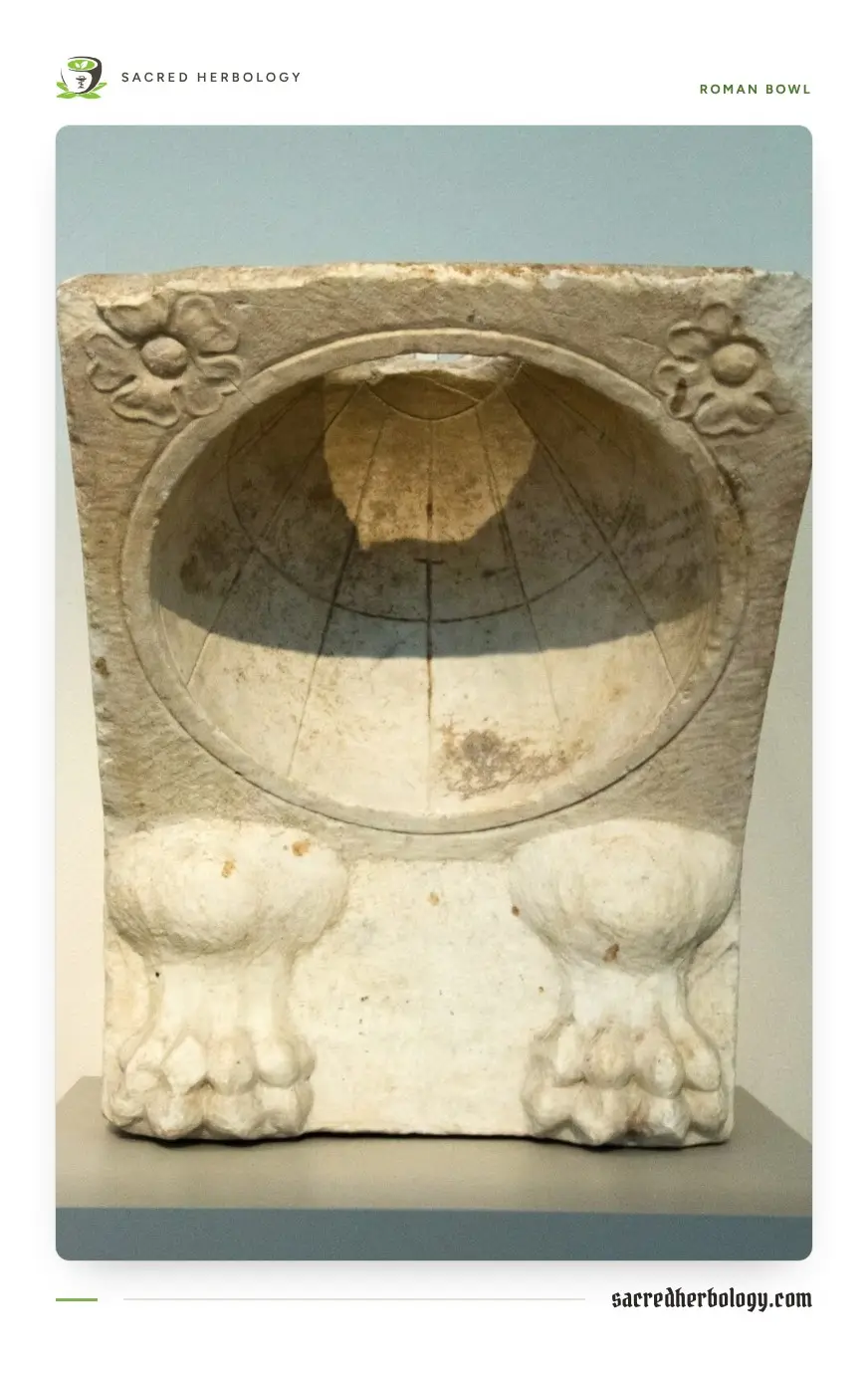

The twelve came from Egypt and Babylon, by two different roads. Egyptian priests told the hours of the night by watching stars rise in turn over the eastern horizon. Lists of these stars, the decans, are painted inside coffin lids from the early second millennium BCE, laid out as tables, perhaps so the dead could keep time in the dark. By the time the system settled, the night held twelve of these star-hours, and the day, measured with shadow clocks, was given twelve to match. That is the Egyptian root of our twenty-four. The Babylonians, for their part, split the full day and night into twelve double hours, and their habit of counting in sixties gave us the minute and the second. Herodotus, writing in the fifth century BCE, says the Greeks learned the sundial and the twelve parts of the day from the Babylonians.
The Greeks had a word for the result, hōra, which first meant any season or fitting time and only slowly narrowed to a twelfth of the day. Their astronomers knew perfectly well that seasonal hours were awkward for calculation. Hipparchus in the second century BCE, and Ptolemy in the second century CE, worked with equal hours, the “equinoctial” hours, each one a twenty-fourth of a full day and night, because those were the hours that held still long enough to do sums with. The seasonal hours, which the Greek books call kairikai, belonged to everyday life. A Roman met a friend at the third hour, ate at the ninth, went to the baths in the afternoon, and the clock that told him so stretched with the year.
Vitruvius, the Roman architect, spends part of his ninth book on how to build sundials and water clocks, and the water clocks are the clever part. A sundial shows seasonal hours without any help, because the shadow does the work. A water clock drips at a steady rate, so to show seasonal hours it had to be adjusted through the year, and Vitruvius describes the gearing and changing scales that did it. Roman engineers went to real trouble to make a machine keep an uneven hour. That tells you how firmly the uneven hour sat in people’s heads.
The old hours left marks in our language. The monastic day was built on them: prime at the first hour, terce at the third, sext at the sixth, none at the ninth. The sixth hour, sexta, the middle of the day, is the root of the Spanish siesta. The ninth hour, nona, mid-afternoon in the old count, drifted earlier over the Middle Ages until it settled at midday, and it gave English the word noon.
Equal sixty-minute hours came with the striking clocks of the fourteenth century, and it took a long time for Europe to give up the old kind. By the 1330s some Italian towns had public clocks striking hours of equal length, and the phrase “of the clock” grew up to tell that kind of hour apart from the other. Japan kept seasonal hours much longer than Europe did. Its clockmakers built ingenious mechanical clocks with movable hour markers or adjustable weights, so that a single clock could follow the uneven hours through the year, and the country only changed over to equal hours with the calendar reform at the start of 1873.
The planetary hours never gave them up. They are always the seasonal kind, counted from the real sunrise and the real sunset where you are standing. Some modern apps and calendars simplify this and use sixty-minute blocks from sunrise, or from midnight. That is a modern shortcut, and it gives a different answer from the old books.
The order of the seven
Ancient astronomers knew seven wandering lights in the sky: the Sun, the Moon, Mercury, Venus, Mars, Jupiter and Saturn. They ranked them by how slowly they seem to move against the stars, which they took to mean how far away they were. Saturn, the slowest, went at the top. The Moon, the fastest, went at the bottom. That gives Saturn, Jupiter, Mars, Sun, Venus, Mercury, Moon. Modern writers call it the Chaldean order, a name that points back to Babylonian astronomy, though the sequence as we have it comes from Greek writers.
That ranking had rivals, and the ancients argued about it. The trouble was the Sun, Venus and Mercury, which all take about a year to go round the zodiac, so speed alone could not settle which was further away. Plato, in the Timaeus, puts the Sun straight after the Moon, with Venus and Mercury beyond it. Ptolemy, in the ninth book of the Almagest, admits that older astronomers put Venus and Mercury below the Sun and some later ones put them above, and he sides with the older view, which leaves the Sun in the middle of the seven. Around 400 CE the Roman writer Macrobius, in his commentary on Cicero’s Dream of Scipio, sets the two schemes side by side. Cicero, he says, follows Archimedes and the Chaldeans in putting the Sun fourth. Plato follows the Egyptians. The Babylonians themselves listed the planets in an order of their own, with no interest in distance at all, so the “Chaldean” in the modern name is a borrowed label, an old Roman way of saying “astrologers from the East”.
The order with the Sun in the middle won, and it had a pleasing shape: three planets above the Sun, three below, the king in the centre of his court. It is the only order that produces the week we have.
The rule is simple. The first hour after sunrise belongs to the planet that rules the day. Each hour after that goes to the next planet down the list, and after the Moon you go back to Saturn. You keep counting straight through the night.
Try it with Saturday. Hour one is Saturn. Hours eight, fifteen and twenty-two come round to Saturn again. Hour twenty-three is Jupiter, hour twenty-four is Mars, and the first hour of the next day falls to the Sun. So the day after Saturn’s day is the Sun’s day. Keep going and the Sun’s day hands on to the Moon, the Moon to Mars, Mars to Mercury, Mercury to Jupiter, Jupiter to Venus, and Venus back to Saturn. That is the week.
There is a neat bit of arithmetic under this. Twenty-four hours divided among seven planets leaves three over, so each day’s ruler sits three places further down the list than the day before. If you write the seven planets round a circle in the Chaldean order and join each one to the planet three places on, you draw a seven-pointed star, and following its lines takes you through the days of the week in order. Occult books from the Renaissance onward print this star, the heptagram, as a diagram of the whole system. It is a pretty thing, and it is honest: it shows exactly how the week falls out of the hours.
Where the week came from
The Roman historian Cassius Dio, writing in Greek in the early third century, stopped in the middle of his account of Pompey taking Jerusalem to explain this. He says the custom of naming the days after the seven planets was started by the Egyptians, that in his time it had spread to everyone, and that the old Greeks had known nothing of it. He offers two explanations. One is a musical idea about the intervals of the fourth. The other is exactly the hour count I have just walked you through, starting Saturn in the first hour and running the planets round until the next day’s ruler falls out.
Why was Dio talking about planets in a chapter on the fall of Jerusalem? Because Pompey took the Temple in 63 BCE on the day the Jews kept as their sabbath, which Dio calls the day of Saturn, and he pauses to explain to his readers why the day had that name. That moment is a good picture of how two different weeks met. The Jewish seven-day week, counted from the creation story with the sabbath at its end, is older than the planetary week and grew from a different root. The planetary week is an astrologer’s week, born from the hour count. The two happened to have the same length, and around the eastern Mediterranean they slid together, so that the sabbath came to be called Saturn’s day by outsiders. Tacitus, writing about the Jews in the fifth book of his Histories, passes on the view of some Romans that their seventh-day rest was kept in honour of Saturn.
Modern historians generally place the invention of the planetary week in the Hellenistic astrology of the last centuries before Christ, with Alexandria the likeliest home for it. By the first century BCE it was part of Roman life. The poet Tibullus, lying sick on Corfu, remembers the excuses he made for putting off his journey from Rome, and one of them was that he had kept “Saturn’s holy day”. In the fourth century the Alexandrian astrologer Paulus sets out the rulers of the days and hours as a routine part of his textbook for students.
Ordinary Romans used the planetary week alongside their older eight-day market cycle. Graffiti scratched on walls at Pompeii, which was buried in 79 CE, list the days under the names of the planetary gods next to the market towns of the district, a kind of handy calendar for knowing where the next fair was. Plutarch, a generation or so later, wrote a dinner-table discussion on why the days named after the planets come in a different order from the planets themselves. Only its title survives in his Table Talk, which is a shame, because it would have told us how an educated Greek of the first century explained the puzzle.
Christians took the week over too, with some unease about the names. Justin Martyr, writing in Rome around the middle of the second century, tells the emperor that Christians gather “on the day called the day of the Sun”. In 321 the emperor Constantine made “the venerable day of the Sun” a day of rest for the courts and the townspeople, while letting farmers work if the weather called for it. The church preferred to call it the Lord’s Day, which is where the Romance languages get domingo and dimanche. In the sixth century Martin, bishop of Braga in what is now northern Portugal, wrote a sermon to country people, On the Correction of Rustics, scolding them for naming the days after Mars, Mercury, Jupiter, Venus and Saturn, whom he counted as demons. Portuguese is the one major Romance language that uses church numbers for the weekdays, segunda-feira, terça-feira and so on, and tradition gives Martin the credit, though how much of the change he really caused is hard to say.
Your own week still carries the planets. Saturday, Sunday and Monday are Saturn’s, the Sun’s and the Moon’s. The other four were renamed by speakers of the early Germanic languages, who swapped in their own gods: Tiw for Mars in Tuesday, Woden for Mercury in Wednesday, Thunor for Jupiter in Thursday, and Frige for Venus in Friday. French keeps the Roman ones plainly: mardi, mercredi, jeudi, vendredi.
The same week went east as well as north. In Sanskrit the days carry the names of the same seven planets in the same order, from Ravivāra, the Sun’s day, to Śanivāra, Saturn’s. The Sanskrit word horā, used by Indian astrologers for the planetary hour, is the Greek hōra carried along the trade routes with the rest of Greek astrology in the early centuries CE. Buddhist astrological texts brought the planetary week to China and from there to Japan, where the old names came back into daily use in the late nineteenth century. Japanese Sunday is still the Sun’s day and Monday the Moon’s, and the other five are named for the five Chinese elements that had been matched to the planets: fire for Mars, water for Mercury, wood for Jupiter, metal for Venus and earth for Saturn. A Japanese office worker and a Roman legionary keep the same week for the same reason, a count of hours worked out in Hellenistic Egypt.
The weekday names are part of everyday language and custom. The hours themselves stayed with the astrologers and the magicians.
The hours in the grimoires
Once each hour had a planet, it could be used to choose a moment. If you wanted the influence of Venus, you worked on Friday, in an hour of Venus. This idea runs all through the European grimoires.
Astrologers had been choosing moments for a long time before that. The branch of astrology called elections, picking the best time to start a journey, lay a foundation or marry, goes back to the Hellenistic period, and it reached medieval Europe largely through Arabic books. The best known of these in magic is the Ghāyat al-ḥakīm, the “Goal of the Sage”, written in Arabic in the eleventh century and translated into Spanish and then Latin at the court of Alfonso X of Castile in the 1250s, where it got its Latin name, Picatrix. It is a vast, rambling handbook of astral magic, and it times its talismans and its prayers to the planets by the state of the heavens. Its timing is mostly the astrologer’s kind, built on where the planets actually stand in the sky. The planetary hours were simpler and needed no chart, and in the later grimoires the simpler method spread.
The Key of Solomon, the best known of them, is attributed to King Solomon, which it certainly was not. The manuscripts behind the English edition that S. L. MacGregor Mathers published in 1889 are Renaissance and later copies, most of them written long after the Middle Ages. Its second chapter is on the days and hours and the virtues of the planets. It says each of the twenty-four hours is governed by one of the seven planets in regular order, and then gives the uses of each. The days and hours of Venus are good for friendship, kindness and love. Those of Mars are for war, courage and overthrowing enemies. Those of the Moon are for voyages, messages and reconciliation. Saturn, as you might expect, gets the darkest work: the text says his days and hours are for summoning the souls of the dead.
The Solomonic books have a Greek ancestry too. A Byzantine text known as the Hygromanteia, or the Magical Treatise of Solomon, survives in Greek manuscripts mostly of the fifteenth and sixteenth centuries. It is framed as Solomon teaching his son Rehoboam, and it sets out the planetary hours of each day of the week with the angel and the demon in charge of every one. Scholars who have studied it see it as one of the sources the Latin Key of Solomon grew from. So the hours came into the Solomonic tradition early, and they stayed.
The Heptameron, a short book of ceremonial magic falsely credited to the Italian physician Pietro d’Abano, who died around 1316, goes further and gives a name to every hour of the day and every hour of the night, alongside the angels that rule each day. It was printed in Latin in the sixteenth century, bound with a Fourth Book of Occult Philosophy falsely credited to Agrippa, and Robert Turner put both into English in 1655. Most English-language ceremonial magic since then has drawn on that small volume.
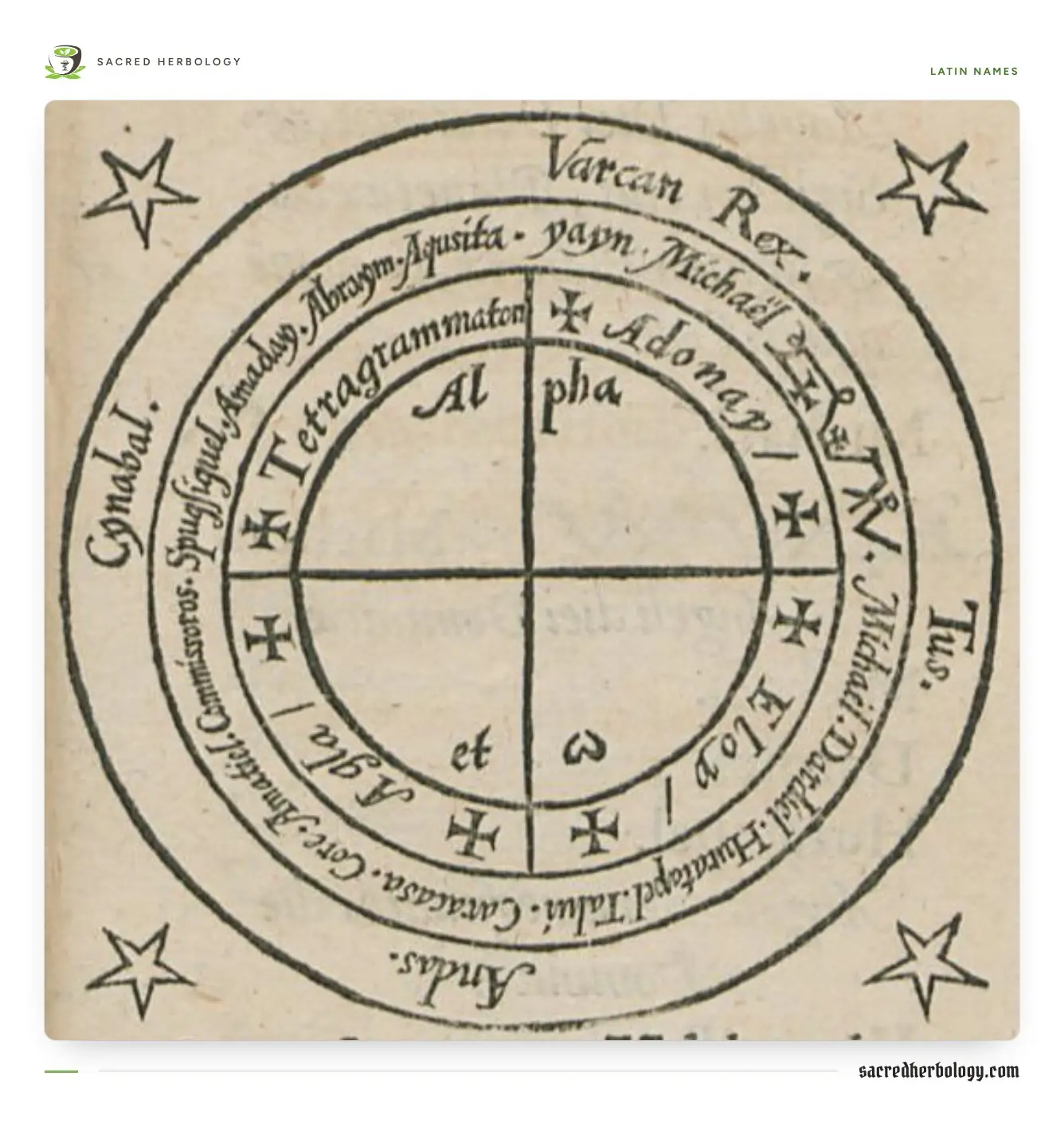

The Heptameron is a working book, and it reads like one. Each day of the week gets its angel: Michael for Sunday, Gabriel for Monday, Samael for Tuesday, Raphael for Wednesday, Sachiel for Thursday, Anael for Friday and Cassiel for Saturday. The first hour of the day is called Yayn, the second Janor, and so on through twelve names for the day and twelve for the night, each to be written into the circle the magician stands in when working at that hour. The book also names the seasons, the angels of each season and the names of the Sun and Moon in each, so a properly made circle was fixed to a single hour, on a single day, in a single season. The woodcut circle printed with the 1565 edition shows the pattern set for the first hour of a Sunday in spring.
The genuine Agrippa covers the hours as well. Heinrich Cornelius Agrippa’s Three Books of Occult Philosophy, printed in full in 1533 and put into English in 1651, deals in its second book with the planetary hours and explains that they are the unequal hours, measured from sunrise and sunset. Agrippa was a scholar and he wanted his readers to get it right. A century later the Lemegeton, a collection of Solomonic texts in seventeenth-century English manuscripts, includes a section called the Ars Paulina that is given over to the angels of the hours of the day and night.
The astrologers kept a hand on the hours as well. William Lilly’s Christian Astrology of 1647, the great English textbook of horary astrology, the art of answering a question from a chart cast for the moment it is asked, prints a table of planetary hours. Lilly uses the ruler of the hour as a check on whether a question is fit to be judged. If the planet that rules the hour agrees in nature with the planet that rules the rising sign, the question is “radical”, sound, and the astrologer can go ahead. It is a modest job for the hours, and a revealing one. Learned astrologers treated them as a quick sign to be checked against the real sky, and seldom leaned their whole weight on them.
The idea carried on into modern plant work. Frater Albertus, in The Alchemist’s Handbook (1960), and Robert Bartlett, in Real Alchemy (2006), both teach the spagyric worker to begin the work with a plant on the day and in the hour of the planet that rules it. Here the planetary herbs and the planetary hours meet. A plant of the Sun is handled in an hour of the Sun, on a Sunday if you can manage it.
Not every astrological herbalist leaned on the hours. Nicholas Culpeper, in 1652, told the reader who gathered herbs to wait until the plant’s ruling planet was angular, strong in the chart of the moment, with the Moon in good aspect to it. That is a different test, done with a full chart, and harder to meet than simply waiting for the right hour to come round.
Between Culpeper and Frater Albertus came the magical revival of the late nineteenth century. Mathers, who made the Key of Solomon available in English, was one of the founders of the Hermetic Order of the Golden Dawn in London in 1888, and the magical orders of that period took the hours from the grimoires and passed them on to their members with the rest of the Solomonic material. Through them the planetary hours reached the twentieth century in good working order. Most modern books on the subject, the handbooks on candle magic and herb magic and talismans, inherit the method from this line, and their authors mostly lived in the north, which is one reason so many printed tables were worked for northern cities.
Some modern misreadings
A tradition that has run for two thousand years picks up some mistakes on the way, and a few of them are common enough that you will meet them in print or on your phone. These are worth sorting out, whatever you make of the hours themselves.
The first is the sixty-minute hour, which I mentioned above. A planetary hour that starts at sunrise and runs for exactly sixty minutes is a modern convenience. At the equinox it lands close to the old answer, because day and night are then nearly equal. As the year moves away from the equinox it drifts, and on a winter solstice day in Hobart the error has grown to about three hours by sunset. The old books are clear that the hours are a twelfth of the real daylight, and Agrippa takes the trouble to say so.
The second is where the day starts. The planetary day runs from sunrise to sunrise. The hour just after midnight on a Saturday morning, by the clock, still belongs to Friday’s night and Friday’s sequence of hours, and Saturday’s first hour waits for the dawn. Tables that reset the count at midnight get the small hours wrong every night of the year.
The third is the idea that the ruler of the hour has something to do with where that planet is in the sky. It has nothing to do with it. An hour of Mars comes round whether Mars is overhead, below the horizon, close to the Sun and invisible, or moving backwards through the zodiac. The scheme is a fixed rotation, worked out once and turning like a wheel. That is exactly why Culpeper and Lilly wanted more than the hour, a real chart, and why the Picatrix looked at the heavens. Within the tradition the hours were always the easy method and the chart the hard one.
The fourth is the attempt to fit in Uranus, Neptune and Pluto. Some modern writers have tried to give the outer planets hours of their own. The arithmetic will not have it. The week depends on seven rulers and a twenty-four-hour day; add planets and the days no longer fall out in their order, and the link between the hours and the week, which is the whole elegance of the thing, is gone. The traditional scheme is a seven-planet scheme from end to end.
The fifth is the claim that the planetary hours are thousands of years older than they are, older than the pyramids, or straight from the priests of Babylon. The ingredients are old: Egyptian hours, Babylonian astronomy, the seven planets. The scheme that puts them together appears in the Hellenistic world, in the last two or three centuries before Christ, and that is already a very respectable age. Nobody needs to add to it.
Now turn the globe over
Everything above was written by people living between about 30 and 55 degrees north. So what happens when you carry the system to Australia?
The ancients knew the length of the day changed as you went north or south, and they mapped their world by it. Greek geographers split the inhabited lands into bands called klimata, climes, each named for a place and defined by the length of its longest day. Ptolemy’s set of seven runs from Meroë on the upper Nile, where the longest day is about thirteen hours, up through Syene, Lower Egypt, Rhodes and the Hellespont, to the mouth of the Dnieper, where it reaches sixteen. They also reasoned that there ought to be a matching temperate band in the south. Macrobius describes one, with seasons the reverse of the north’s, inhabited perhaps, but cut off by the burning zone at the equator so that nobody from the north could ever reach it.
Much of Australia lies in that band. Turn Ptolemy’s climes upside down and they fit Australia surprisingly well. In the tropical north of Australia the longest day is about thirteen hours, close to Meroë’s. Hobart’s longest day is a bit over fifteen hours, close to the Hellespont clime, the latitude of the Dardanelles and the old city of Byzantium. The ancient authors would have understood our sunrise tables at once. They just never expected anyone to use them.
The first thing to say is that the scheme travels well. It never assumed a hemisphere. It needs only two things: the ruler of the day, which is the same everywhere, and your own sunrise and sunset. Saturday is Saturn’s in Darwin as it is in Cordoba. The Chaldean order stays the same, since it is about the planets and has nothing to do with the seasons. People sometimes ask whether the hours ought to be flipped for the south, the way many Australian pagans flip the Wheel of the Year and keep midsummer in December. Nothing in the old texts gives a reason to. The Wheel of the Year is itself a modern calendar, put together in England in the 1950s and 1960s, and it is tied to the seasons. The planetary hours are tied to the day.
What does change is every number in the table.
- The seasons swap. The long day hours of the old books belong to June in Europe, and to December here. A European almanac tells you the day hours are longest right when ours are at their shortest.
- Latitude changes the stretch. At the winter solstice, a day hour in Hobart runs about forty-five minutes and a night hour about seventy-five. At midsummer it flips, and the day hours run about seventy-seven minutes. In Melbourne the swing is almost as wide. In the tropics the hours hardly move: in Darwin a day hour runs from about fifty-seven minutes in June to about sixty-four in December. The tropics are the easy part of the country. The south is where a borrowed table goes badly wrong.
- Sunrise is local. Two towns on the same latitude but a few hundred kilometres apart see the sun rise at different clock times, so a table made for Brisbane is out for any other Queensland town, even in the same time zone. The hours begin with your sunrise.
- Clocks lie a little. Queensland keeps AEST all year, but New South Wales, Victoria, Tasmania, South Australia and the ACT move their clocks an hour in summer. The sun doesn’t move, so the hour of Venus starts at the same moment either way, but the time printed on the clock face shifts by an hour. An almanac has to say which clock it is using.
- Even sunrise has a definition. Almanacs usually count sunrise as the moment the upper edge of the sun clears a flat horizon, with an allowance for the way the air bends light. Different traditions and different software pick slightly different moments, and the results can differ by a few minutes. The old authors never had to agree on this.
Think about what that means for someone using a London table in Hobart in June. London’s June day is over sixteen and a half hours long, so its day hours run about eighty-three minutes. Hobart’s June day is about nine hours, with day hours of forty-five minutes. Hobart’s sun also rises about three hours later by the clock than London’s. Read the London table by your own clock and the Hobart sun goes down while that table still has you in the ninth hour of the day. Anyone who has tried to follow a northern handbook to the letter down here has probably been working in the wrong hour for most of the day.
There is one more thing the south shows up, and it is less about the hours than about the direction you turn. In Europe the sun climbs in the east, swings across the southern sky and sets in the west, and “sunwise” means clockwise. Down here it swings across the northern sky, so the sun’s path runs the other way. Australian pagans have argued about this for decades, and some reverse the direction they move in a circle. The grimoires, written in the north, never considered it.
Lynne Hume, whose Witchcraft and Paganism in Australia is still the best published study of how these traditions settled here, discusses the debate: whether to cast a circle anticlockwise, whether to swap the elemental quarters so that fire sits in the north where the sun is, whether to move the festivals by six months. Australian practitioners have answered these questions in different ways, and Hume describes the range without picking a winner. The planetary hours mostly escaped the argument, because once you count from your own sunrise there is nothing to turn round. The planets keep their order, the day keeps its ruler, and the southern sunrise does the rest.
And at the far end of the country the scheme simply breaks. At Australia’s Antarctic stations there are weeks in midsummer when the sun never sets, and weeks in midwinter when it never rises. With no sunrise there is no first hour, and twelve parts of nothing are nothing. No old author ever had to deal with that, and I know of no traditional ruling on it.
The far north of Europe has the same problem, of course. Anyone who wants to use the hours above the Arctic Circle in June, or at Mawson in midwinter, has to make up a rule of their own, such as falling back on equal hours, and any such rule is a modern patch and should be called one. The texts give no guidance, because nobody who wrote them ever stood that far from the equator.
A worked example
It helps to see the sums done once, so here is a winter Thursday in Hobart, a few days from the solstice, with clock times in AEST.
The sun rises at about 7.40 am and sets at about 4.42 pm. That is about nine hours and two minutes of daylight, five hundred and forty-two minutes. Divide by twelve and each day hour is a little over forty-five minutes. Thursday belongs to Jupiter, so Jupiter takes the first hour, from 7.40 to about 8.25. Mars follows until about 9.10, the Sun until about 9.55, Venus until about 10.41, Mercury until about 11.26, the Moon until about 12.11 pm, and Saturn until about 12.56. Then the round starts again with Jupiter, then Mars, the Sun, Venus, and Mercury takes the twelfth hour, which ends at sunset.
At sunset the night count begins with the Moon, the next planet after Mercury. The night runs from 4.42 pm to sunrise the next morning, nearly fifteen hours, so each night hour runs about seventy-five minutes. Count on through the night and the twenty-fourth hour, the one just before dawn, falls to the Sun. The next planet down the list is Venus, and Friday is Venus’s day. The count closes up exactly, as it does every day of the year.
Do the same Thursday in tropical Queensland and Jupiter still takes the first hour, but the day hours run about fifty-five minutes each, so the tropical count starts nearly an hour ahead of Hobart’s, the two draw level in the late morning, and by sunset the tropical hours are running about an hour behind. Same day, same planets, same order. Different hours.
Working it out yourself
You can do the sums by hand, and it is a good exercise if you want to understand the thing. Find your sunrise and sunset for the day, from the Bureau of Meteorology or Geoscience Australia. Take the minutes of daylight and divide by twelve. That is your day hour. Do the same with the minutes from sunset to the next sunrise for your night hour. Then start with the day’s planet at sunrise and count down the Chaldean order.
It gets tedious for a whole year, which is why almanacs exist. We made one for ten Australian towns, from Darwin and Cairns to Hobart and Perth, because every printed table we could find was worked out for London or New York. Whatever you think of the hours themselves, if you are going to use a two-thousand-year-old method, it should at least be counted from your own sunrise.
Where this comes from
- Cassius Dio, Roman History 37.18-19, in Dio’s Roman History vol. III, trans. Earnest Cary (Loeb Classical Library, 1914).
- Tibullus 1.3, in Catullus, Tibullus and Pervigilium Veneris, trans. J. P. Postgate (Loeb Classical Library, 1913).
- Tacitus, Histories 5.4, in Tacitus: Histories Books IV-V, Annals Books I-III, trans. Clifford H. Moore and John Jackson (Loeb Classical Library, 1931).
- Vitruvius, The Ten Books on Architecture, book 9, trans. Morris Hicky Morgan (Harvard University Press, 1914).
- Macrobius, Commentary on the Dream of Scipio, trans. William Harris Stahl (Columbia University Press, 1952).
- Paulus Alexandrinus and Olympiodorus, Late Classical Astrology, trans. Dorian Gieseler Greenbaum (ARHAT, 2001).
- Ioannis Marathakis (ed. and trans.), The Magical Treatise of Solomon or Hygromanteia (Golden Hoard Press, 2011).
- S. L. MacGregor Mathers (ed. and trans.), The Key of Solomon the King (George Redway, London, 1889).
- H. C. Agrippa, Three Books of Occult Philosophy, trans. J. F. (London, 1651).
- H. C. Agrippa, Henry Cornelius Agrippa his Fourth Book of Occult Philosophy, with the Heptameron attributed to Peter de Abano, trans. Robert Turner (London, 1655).
- William Lilly, Christian Astrology (London, 1647).
- Nicholas Culpeper, The English Physitian (London, 1652).
- Frater Albertus, The Alchemist’s Handbook (1960; revised edition Samuel Weiser, 1974).
- Robert Allen Bartlett, Real Alchemy: A Primer of Practical Alchemy (Quintessence Press, 2006).
- Lynne Hume, Witchcraft and Paganism in Australia (Melbourne University Press, 1997).